Filipino Christmas and New Year Art
These are paintings I made last year for a Christmas and New Year motion graphic for Knowledge Channel, an education-based network in the Philippines.
Description credits: ABS-CBN
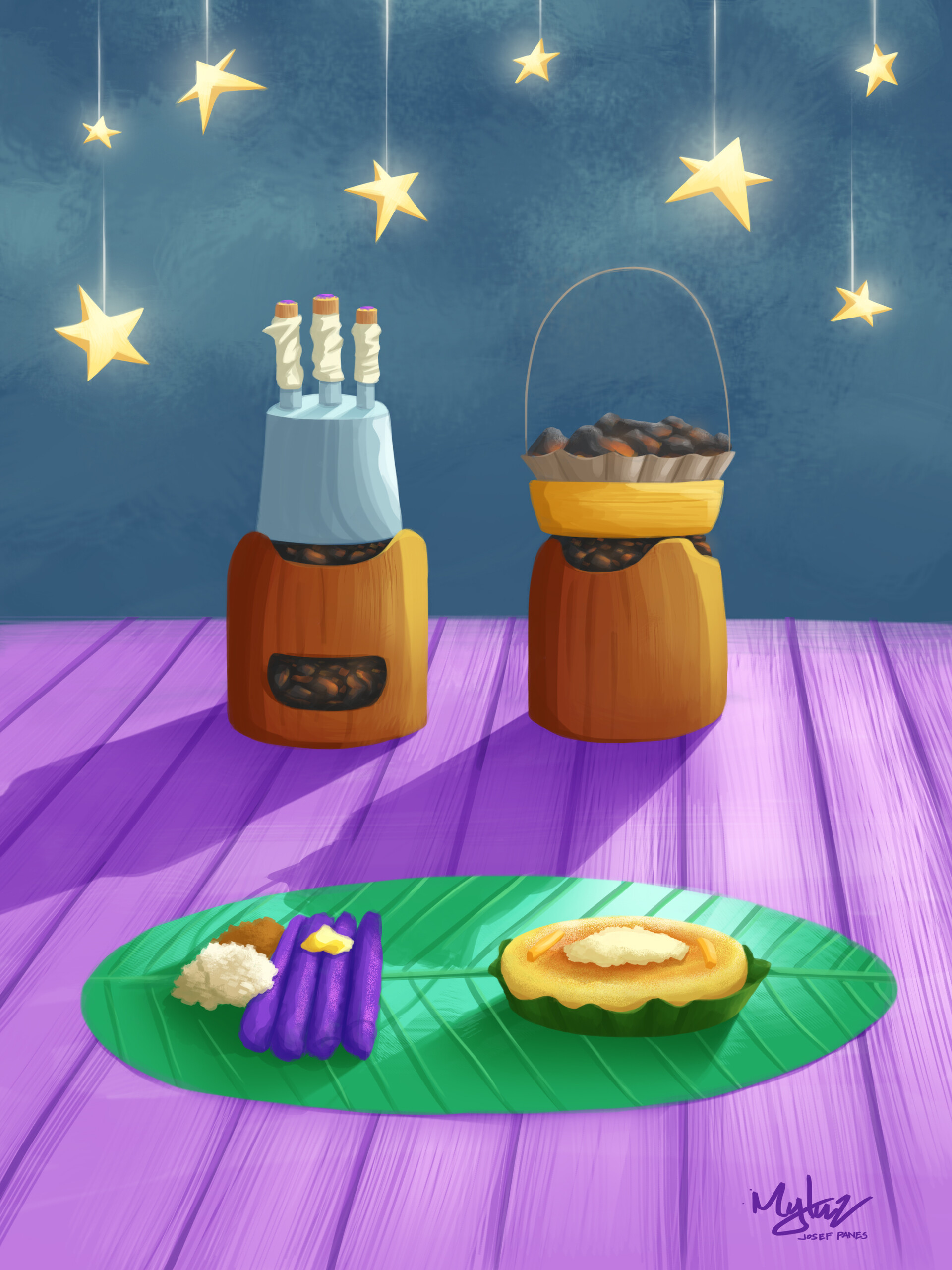
Bibingka and Puto Bumbong are two of the traditional delicacies prepared during Christmas season in the Philippines. These are usually associated with 'Simbang Gabi' (Night Mass) since they serve as breakfast and energizer paired with tea.

Simbang Gabi or Night Mass started in the Philippines in 1669. Spanish priests decided to set night masses to start at dawn so that farmers and fishermen will begin their work early. Eventually, this became an important tradition in Filipino Christmas.
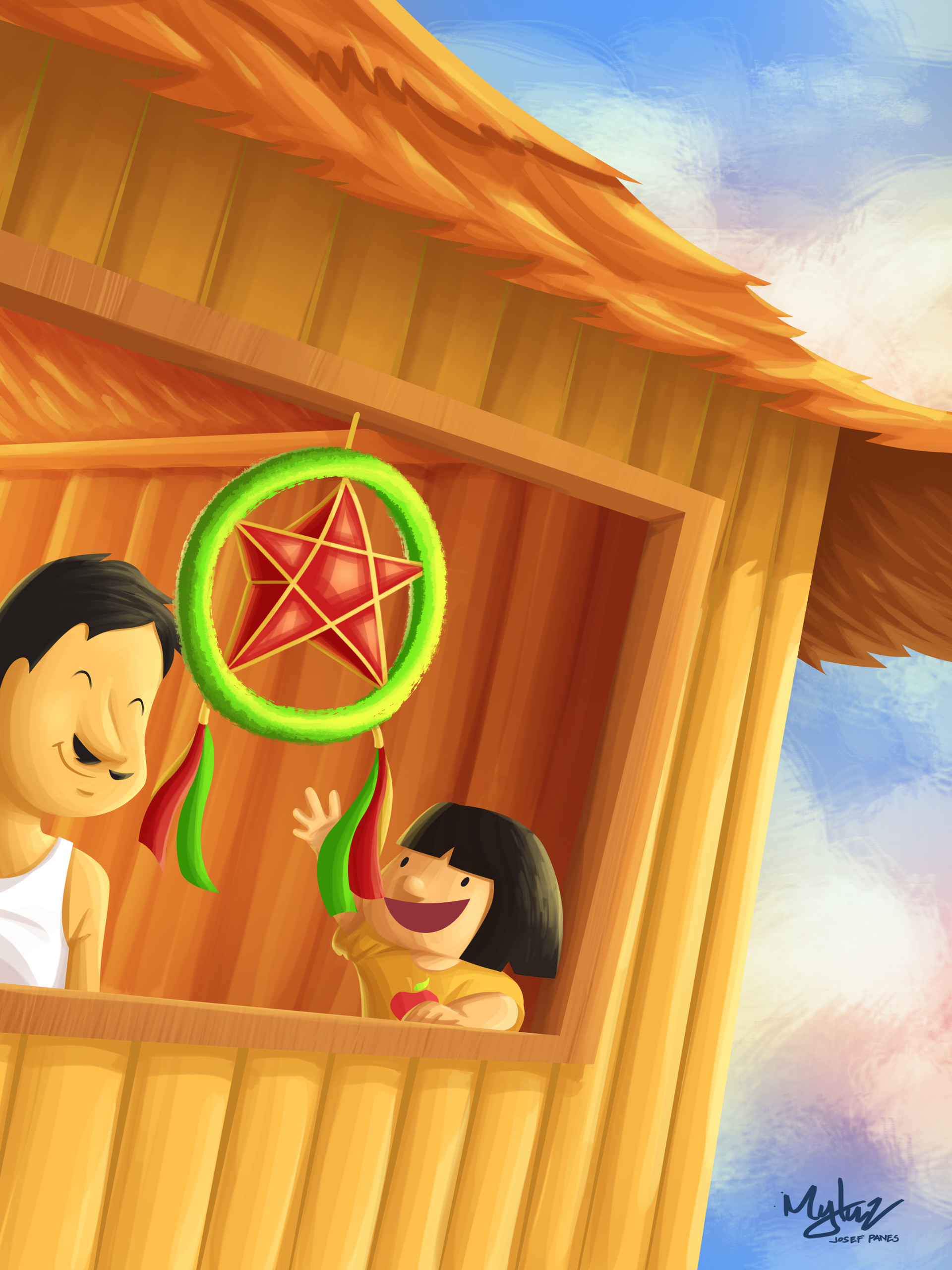
The Parol is one of the brightest symbols of Christmas. In 1908, Felipe Estanislao created the five-pointed star version of this, made from wood and Japanese paper.

During new year's eve, FIlipinos celebrate the Media Noche. This came from the Spanish word "medio" which means 'middle' and "noche" which means 'night'.